

Textured Soya Protein Production Line
China Textured Soya Protein Production Line Manufacturers Factory Suppliers
We specialize in producing all kinds of textured soya protein production line products, mainly 1soya protein production line, meat analogue production line, vegetable protein production line, tvp soya chunks machine, modified starch making machines, tvp soya chunks machine, breakfast corn flakes machine, high moisture vegetarian meat machine, soybean chunks making machine, tvp soya chunks machine, etc.
Our company's technical engineers have over 20 years of industry experience, can provide customers with perfect solutions. We has mature technical expertise, advanced process equipment, extensive production experience, and a complete service system.
Our products sell well in mainstream markets such as Europe, North America, Japan, South America, Oceania, and Asia. We have established long-term cooperative relationships with customers around the world, allowing customers around the world to buy high-quality products and enjoy excellent customer service.





Company Advantages
Advanced Equipment
We have more than 10,000 square meters of workshop. The company has established a trade department, a technical department, a production department, a quality inspection department, an after-sales service department, and laboratories. We operate with a fully automatic CNC production line, and are committed to providing customers with the best products and services.
Well-Experienced
Our company's technical engineers have over 20 years of industry experience, can provide customers with perfect solutions. Professional engineers also can provide expertise consultations and professional advice on product selection, design, installation, and maintenance.
Expansive Market Reach
Our products sell well in mainstream markets such as Europe, North America, Japan, South America, Oceania, and Asia. We have established long-term cooperative relationships with customers around the world, , and have garnered widespread acclaim from satisfied customers.
Customized Services
We welcome product customization, and our team is capable of developing new products or providing technical solutions tailored to customer requirements. lf you have any special request, pls send us the details.
Competitive Price
We provide competitive price and excellent customer service for all our customers. We also can offer different discounts based on your order quantity. Our pricing policies are designed to offer affordable options while not compromising on quality.
24-hour Online Customer Service
Our customer service is available online 24 hours a day. After receiving the service information or feedback from the customer, we will reply and address the feedback in the shortest time. Our customer service team can provide customers with all support on products, customization, after-sales, etc. at any time.

Introduction to Textured Soya Protein Production Line
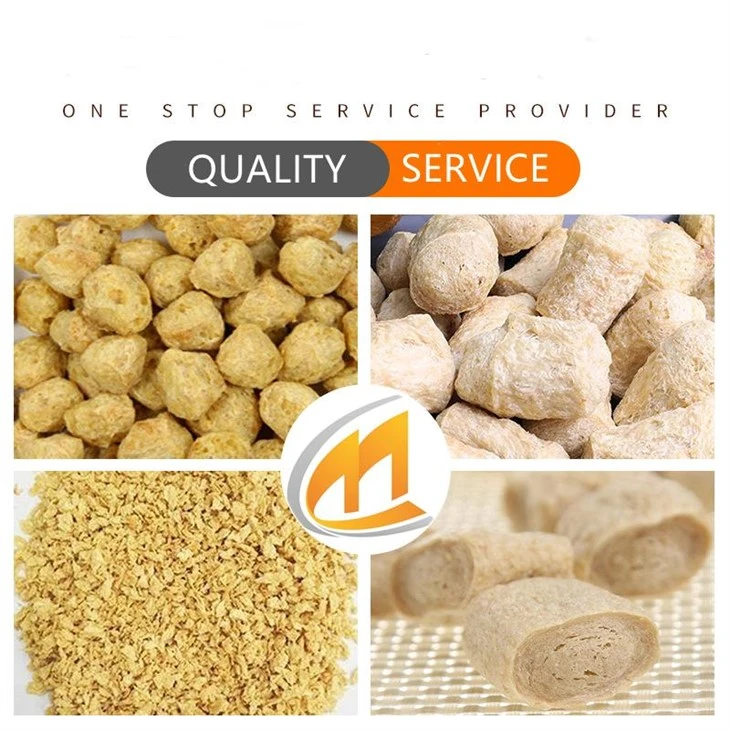
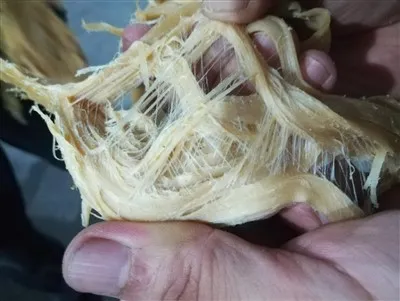
A soya protein production line is a type of extruding equipment that uses high protein and fiber. It uses powder-grinding, stirring, high-temperature, high pressure, and high-cutting to break spherical protein molecules into chain protein molecules. This creates a slice-like fiber structure.
The textured vegetable protein extruder processing line uses defatted soya meal, pea protein, and isolated soya meal as raw materials. Through high-temperature and high-pressure extrusion, the protein molecules rearrange neatly, and tissue structure is aligned with the same direction, similar to the texture of porous tissue in pork, so that the water retention and chewing sensation are good.
After processing in short time high temperature, high water and high pressure, all kinds of harmful substances in soybean are eliminated and the absorption and digestion of the human protein can be improved.
Soya Protein Production Line produces textured protein and fiber protein. This includes soya chunks, nuggets, proteins, and mince. This processing line can be widely applied in the meat-product industry, the fast-food industry, and the instant cool food industry.
Advantages of Textured Soya Protein Production Line
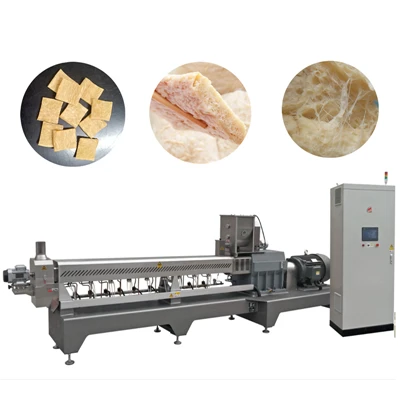
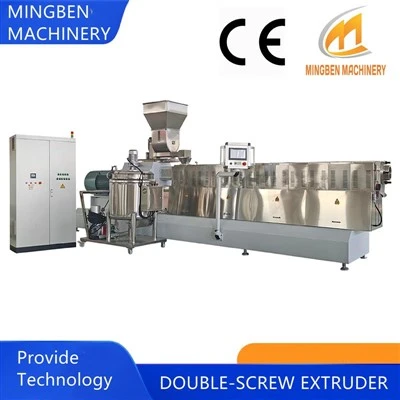
Our Soy Protein Production Line features a twin-screw design. The production and manufacturing of soybean silk protein using a twin-screw extruder is a continuous, ultra-high pressure, high temperature, and short-term sterilization production process that integrates several production processes. Compared with traditional production processes, the twin-screw extruder mainly has the following characteristics in producing soybean silk protein:
- It can allow protein molecule structure modification materials to generate new chemical cross-linking and layered fibrous tissue, with high cost performance in water and oil recovery; Dissolving protein, facilitate digestion, and enhance nutritional composition.
- Short-term ultra-high temperature and high pressure, which avoids various harmful substances contained in soybeans (such as trypsin inhibitor, urease, acid oil, and hemagglutinin). It can remove the soy flavor and eliminate abdominal distension.
- Short production process, low production and manufacturing costs, high output, environmental protection, energy conservation, and high efficiency, simple equipment matching, small footprint, easy operation, no wastewater, green and low-carbon.
- The twin-screw extruder is easy to change the product status and appearance, and offers a wider range of products.

Types of Textured Soya Protein Production Line
The textured soya protein production line produced by our company mainly include the following types:
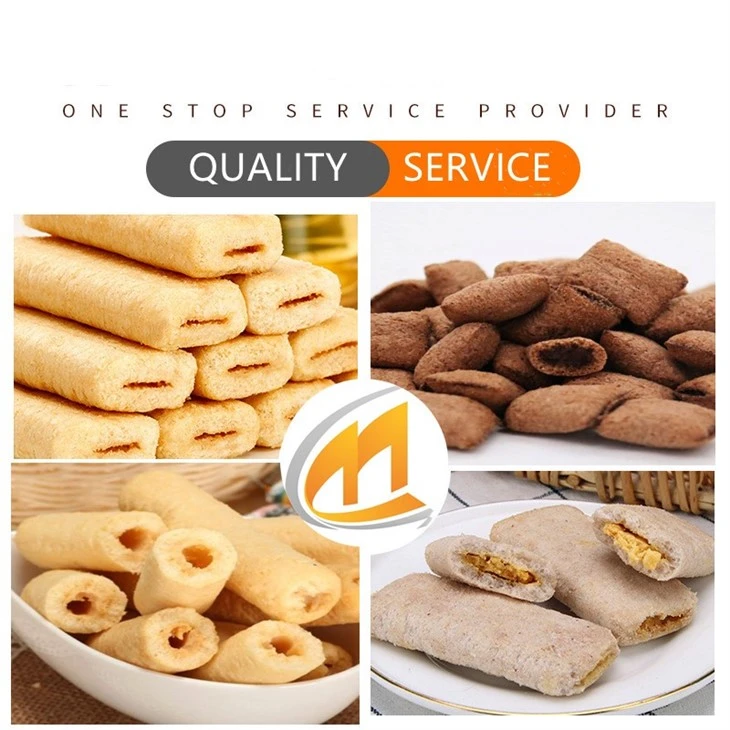


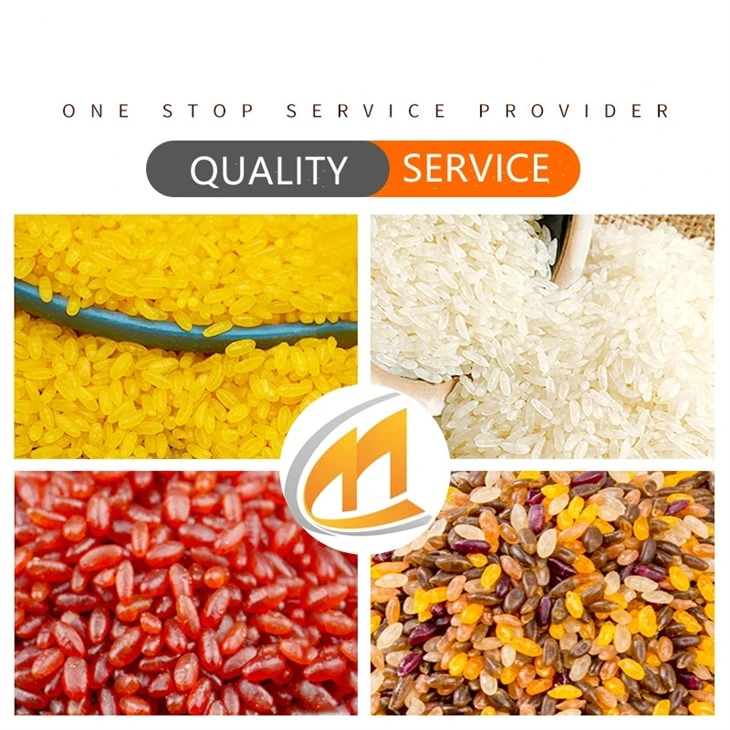
Soy Protein Production Line
Soy protein production lines mixes protein-rich raw materials with water, then conveys the mixture through the extruder barrel with rotating screws. The mixture is heated and sheared, and then pushed through a die.
Soy protein production lines come in different models and capacities, with an experimental capacity of 10-30 kilograms per hour. They are suitable for developing new products in food companies' laboratories and for use in universities and research institutions. Customers can choose them according to their production needs.
Advantages:
- High quality extruder for lines up to 30kg per hour
- Capable of basic extrusions as well as premium multi-ingredient products
- Lower costs due to high efficiency motors, minimal waste, and reduced changeover time
- Modular design allows for perfect setup for each product type, enhancing quality
- High-torque gearbox with splined shafts provide extended service life
Applications:
Soy Protein Production Line is widely applied to many industries, such as can, seasoning, ham, meat, cooking, etc.
Modified Starch Making Machines
Our modified starch making machines use twin screw extruder with a special cylinder and a screw structure, and an advanced oil-water separation cooling system. The twin screw combination systems all adopt a high-end frequency converter, which greatly improves accuracy and saves labor and production cost.
Modified Starch Making Machines can process corn starch, cassava starch, potato starch, and others as raw materials to produce the pre-gelatinized starch for sale.
Advantages:
- Fast plug and play, installation and start.
- Easy to operate with PLC controller and touch screen.
- Use quick connection to ensure an easy operation and fast product replacement.
- Use compact design with integrated motor and extruder control system.
- Use movable chassis with water cooling and vacuum unit.
Applications:
Modified Starch Making Machines has a wide range of applications across various industries, including papermaking, textiles, beverages, food, coal molding, putty powder, and petroleum drilling.
Breakfast Corn Flakes Machine
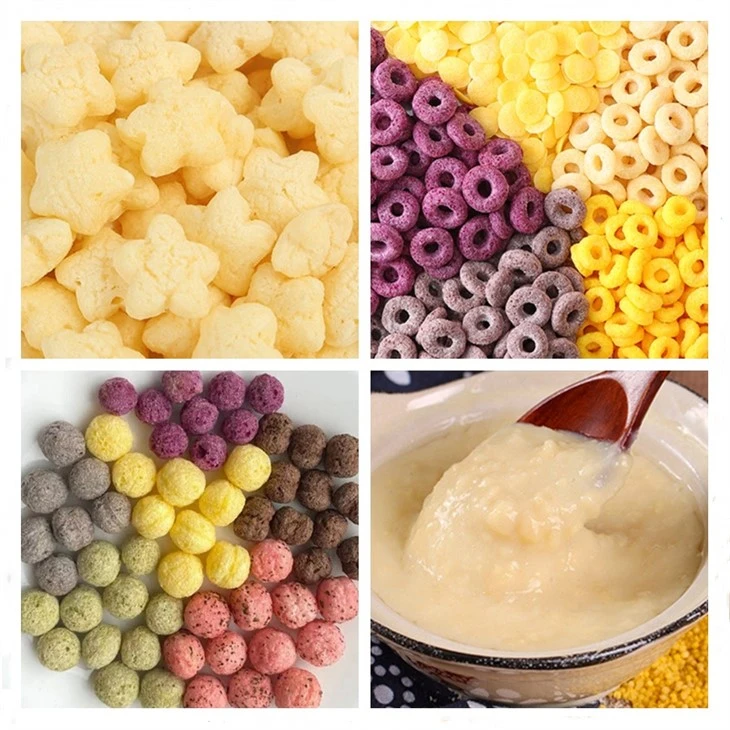
The corn flakes machine uses corn, wheat, oats, and other cereals as raw materials. It goes through the twin-screw extruder for the purpose of cooking and granulation.
The corn flakes machine adopts a scientific production process, which can successfully retain the nutrients in the grain. The whole assembly line has been reasonably matched, allowing you to produce nutritious, delicious breakfast corn flakes while increasing efficiency to reduce the cost.
Advantages:
- Can process numerous materials: Corn, wheat, oat and nearly any other starchy materials.
- Countless styles of final foodstuffs : Lots of shapes ,flavors and even recipes.
- High efficiency: Fast start, stop and adjust the foodstuffs kinds.
- Cost benefits: Water consumption lowered by 60% compared to traditional processing line.
- Full automatic design: Minimize the labor cost.
- Compact design: Minimize occupation area.
Production process:
Raw material treatment→Mixing system→Extrusion system→Pelleting system→Drying system→Fabric system→Expansion system→Seasoning system→Drying system→Cooling system→Packing system
High Moisture Meat Analogue Extruder
High Moisture Meat Analogue Extruder is a technique that uses a twin-screw extruder to convert plant proteins into a fibrous structure. The process involves heating the proteins, then cooling them in a precisely controlled dye to create fibers. The fibers can be cut and flavored to create meat substitutes.
HME is a relatively new process that can change the shape, color, texture, and appearance of the end product. It's often used to help mimic the taste and texture of meat-based and seafood products in plant-based meat.
Production Process:
- Flour Mixer: To mix all the raw materials evenly.
- Screw Conveyor: To lift the materials to extruder feeder automatically.
- Twin screw Extruder Auto Protein meat processing line: To cook the soyabean meal and extruded in different shapes.
- Air conveyor: Take the extruded snack into oven or drying
- Dryer/Oven: To reduce the moisture of extruded protein snacks.
- Cooling Conveyor: To cool down the extruded protein snacks and send to next equipment.
- Packing Machine: Pack the soya protein in different size bags.
Applications:
High Moisture Meat Analogue Extruder can be widely used in meat products, fast food, frozen foods, and can also be made into a variety of vegetarian casual foods and vegetarian dishes.
- Soy beans are loaded into the bunker of the extruder
- A screw feeder is mounted in the bunker, the speed of which (soybean supply) is regulated from the control cabinet or from the control panel
- Soybeans are fed from a feeder to a hopper in which a plate with a magnet is installed
- From the receiving hopper, the raw material enters the screw working body of the extruder
- In the working body soybeans are crushed, mixed and compressed to 15 … 35 atm
- As a result: Tthe temperature of the product rises to 120 … 150 °С, the intracellular moisture evaporates and breaks the fat cells
- Pressure, temperature and steam partially destroy trypsin inhibitors, reducing their content to an acceptable level
- Since the soybean raw material is in the screw working body from 20 … 30 seconds, temperature and pressure do not reduce the feed and nutritional condition of soy protein and fats
- Short-term thermobaric treatment increases the content of protected protein up to 40 … 45%
- The heated mass is squeezed out of the working body through the die in the form of a boiling jet of full fat soybeans
The process flow of Textured Soya Protein Production Line
Mixing of various starchy raw materials, using the intermittent mixer with clamping capacity and an intelligent pulp sheet, a fixed time period can reach more mixing cycles. Accurate liquid-adding equipment can be selected, and mixing the formula ensures the uniform distribution of the ingredients.
The water and soybean powder accurately injected into the feeding mouth of the twin-screw extruder are mixed together. The raw materials are thermo-mechanically processed and extruded while the screw moves, and the controlled speed is maintained according to the thermal control parameters. The screw composition and speed are important factors in the thermo-mechanical process. Short-term high temperature and high pressure eliminate all kinds of harmful substances in soybean.
Drying is particularly important in the food processing industry. The dryer can provide the best drying effect for compact, viscous or thermal products. The product is dried by the air flow and the dryer provides high drying efficiency and accuracy. Drying technology involves liquid in the evaporating product without changing its basic properties and can extend the shelf life of the product.
By passing through the multilayer circular airflow with a stable wind speed, the finished product can quickly release the internal heat to prevent adhering and gelatinization within a shorter time, which is easy to transport and package.
The stepping motor connected with synchronous belt drives to achieve precise food cutting length, the cutting length is precise, uniform, and adjustable. The intelligent control system is convenient for adjusting parameters and easy to operate.
From the raw material intake to the finished product transportation, we use a customized system combination of lifts, belt turntables, and screw conveyors to meet both your space and process needs.
Certifications
Our equipment has obtained the national inspection exemption qualification and meets the requirements of the European Union. We have obtained the CE certificate. The quality of our products is highly praised by customers.

Our Factory
We have more than 10,000 square meters of workshop. The company has established a trade department, a technical department, a production department, a quality inspection department, an after-sales service department, and laboratories. We operate with a fully automatic CNC production line, and are committed to providing customers with the best products and services.


Frequently Asked Questions
As one of the leading textured soya protein production line manufacturers and suppliers in China, we warmly welcome you to buy cheap textured soya protein production line from our factory. All machines are with high quality and competitive price. Contact us for more details.
, Fish Feed Processing Line